some highlights from the last two years teaching music at World of Inquiry School No. 58

Receiving a grant from Joe Bonamassa’s Keepin’ the Blues Alive Foundation for the school.

  • The grant allowed the purchase of 36 acoustic guitars, 3 electric guitars, 3 electric basses, 6 61 key MIDI keyboards, a drum set, and a fender passport for the classroom.

  • One year later, journalist Dan Gross did follow up to the story. The clip includes an interview with two of my amazing students and some short thoughts from me.

KTBA Press Photo

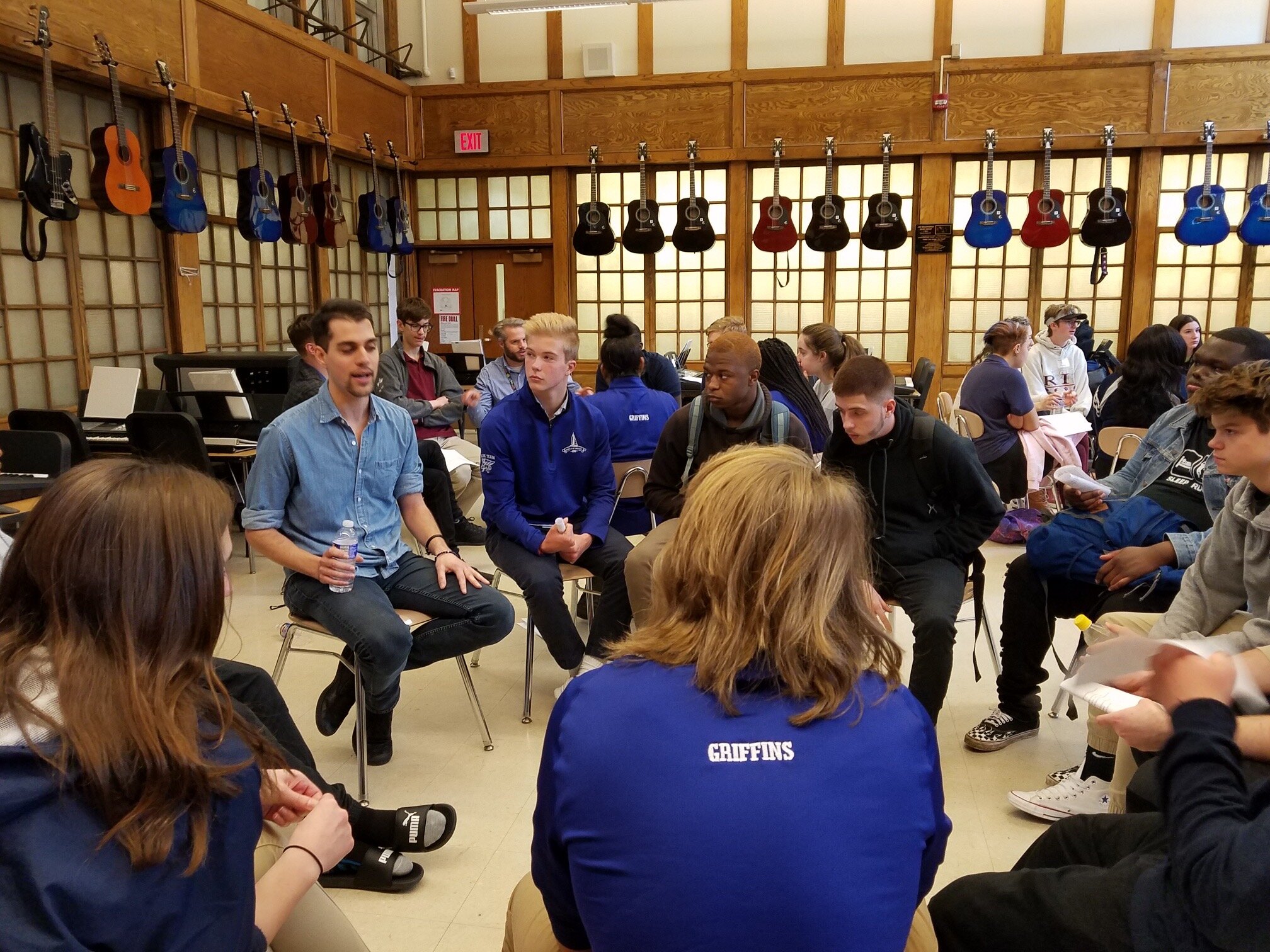
I invited the guitarist from Hamilton: An American Musical to speak with my guitar classes after seeing opening night performance in Rochester. He generously accepted and extended the invitation to two other musicians in the pit. I opened the conversation to any student who I thought would be interested in hearing what they had to share about being professional musicians. A big thank you to Adam Kornreich (guitar), Anna Luce (violin), and Sam Bagala (keyboards) for speaking with the students. 
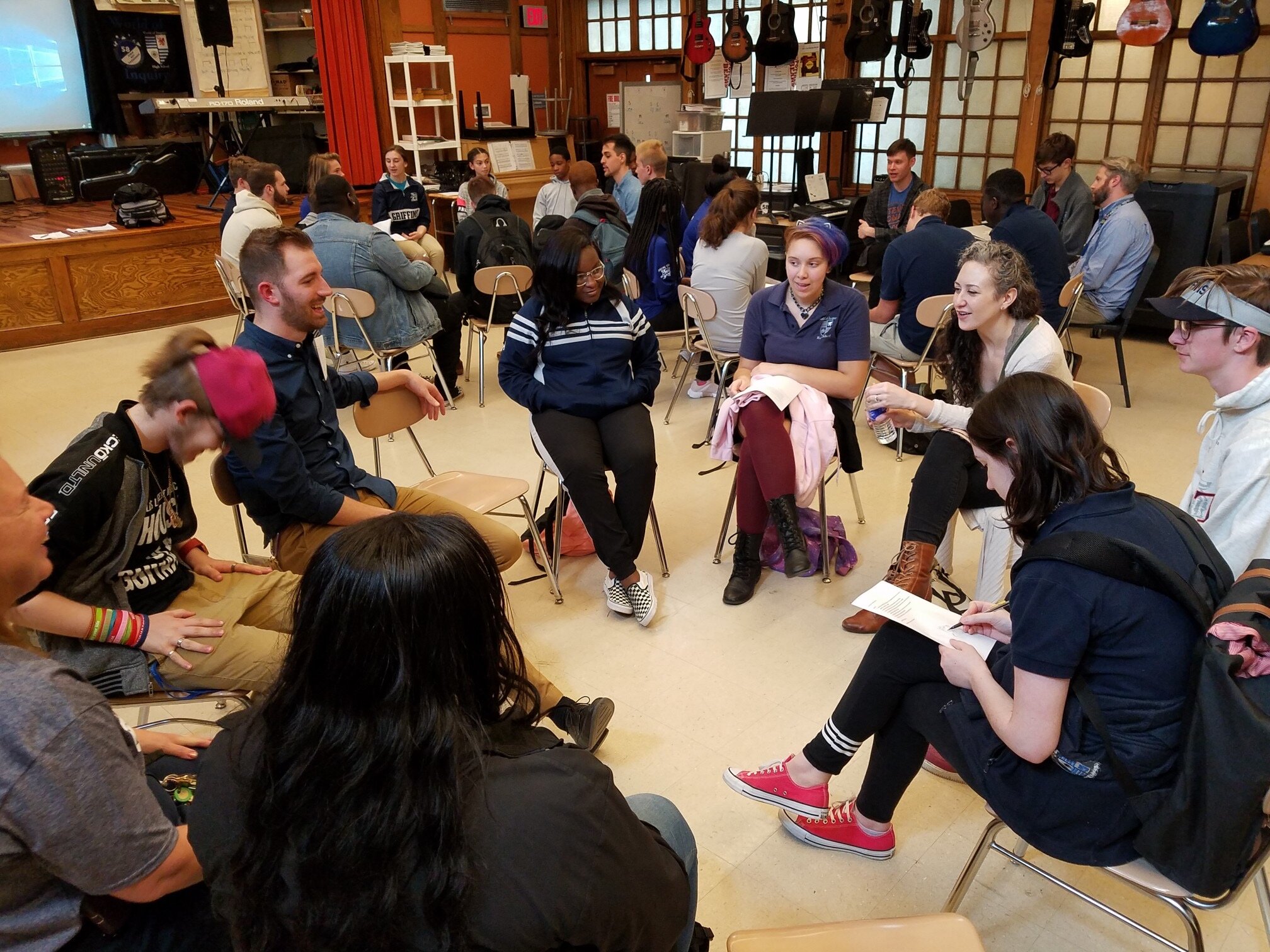
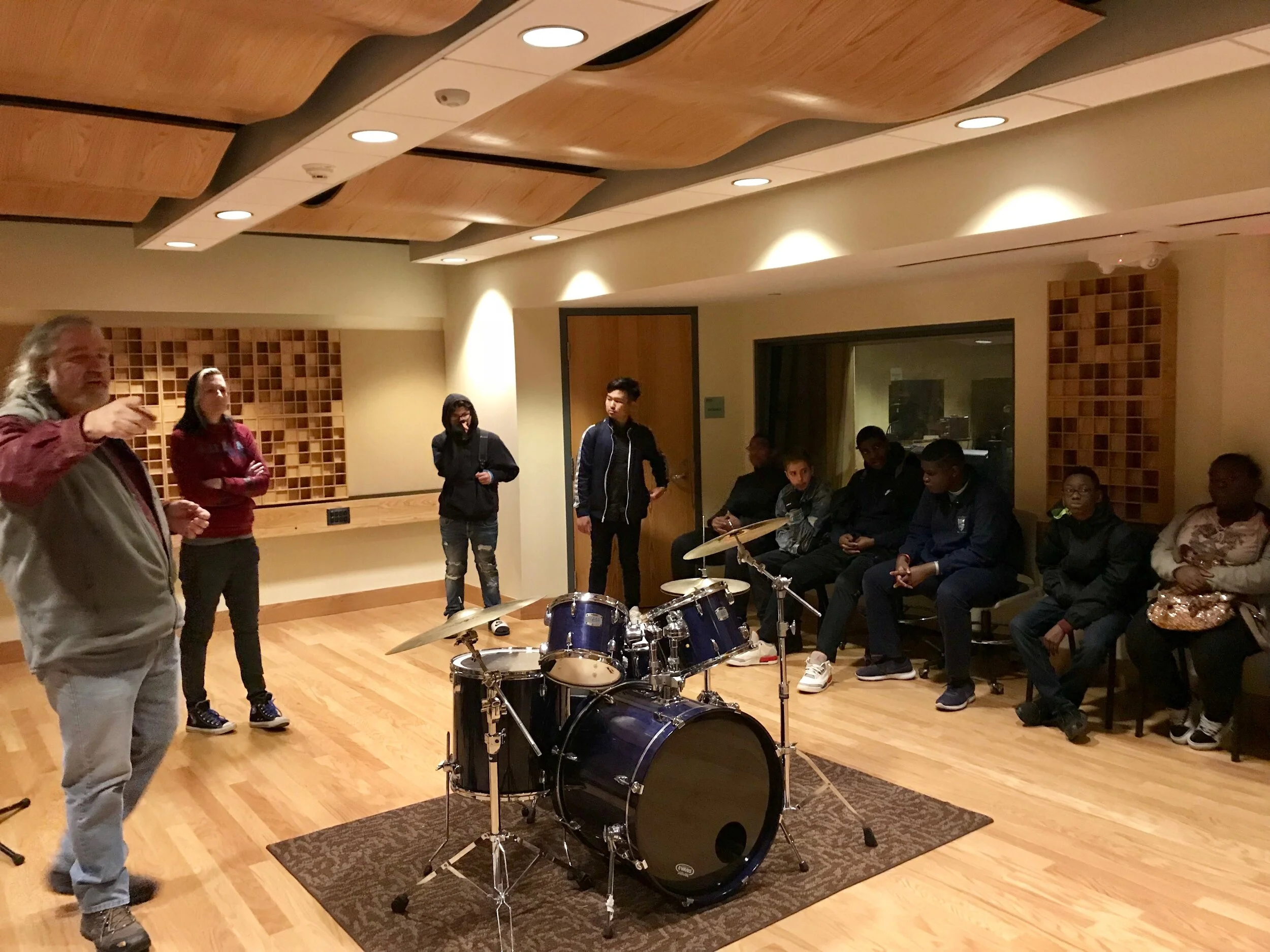
Creating a Live Music & Sound Production Intensive (a three day intensive study of a student-selected subject). In our intensive, we:

  • Visited Green Room Recording Studio with Mr. Matt Rammerman (owner), recording demonstration and music industry discussion.

  • Toured Anthology (a 1000 cap. venue) with owner Mr. Phil Fitzsimmons, followed by a Q&A with Mr. Anthony Washington, a DJ at WDKX 103.9 Radio Station.

  • Toured Flour City Station (a 250 cap. venue) with general manager Mr. Matt Green, followed by discussion about marketing

  • Toured Finger Lakes Community College (FLCC), students explored degree options related to music recording and production, Q&A on college student life and scholarship options.

  • Toured the House of Guitars with Mr. Mike Follett, toured recording studio, discussion live sound production and commercial products available. 

  • Visited Guitar Center with a brief tour and presentation on the hardware and software available for those interested in home audio production.
Whenever I see my students post a video to YouTube or hear they’ll playing at a local open mic in Rochester. Arabella has been a student of mine through her time as a high school student. Here’s a link to her YouTube channel.

Designing a podcasting project using only a chrome book

  • Researching a topic and recording a podcast from start to finish using only a Google Chromebook can seem impossible. I created this project when I was pushing into classrooms daily (an English, Science, or Art classroom). Here’s a .pdf of the project overview with embedded links to all the resources we use throughout the project.

using digital minimalism to simplify online

Throughout quarantine and social distancing, I’ve been spending some my time revising assignments and projects for school, deleting unnecessary and duplicate files, and trying to stay off social media as much as possible. Removing digital clutter helps me feel productive, especially on days when I haven’t felt like I’ve gotten as much done as I could’ve.

Read More

how to pay off debt flipping mid century furniture

One strategy I use to pay off debt includes buying, refinishing, and reselling mid century furniture. It requires some skill and fair bit of knowledge, but I enjoy the style and most of the furniture in my home is original or reproduction. I also have friends who can offer me their advise on any projects that may be a bit ambitious for me at the time. After watching a couple seasons of Mad Men on Netflix, you’ll have a good foundation of what to look for.

Read More

notes on Essentialism by Greg McKeown

Decide What Matters

  • What is something essential in your life that you are under-investing in?

  • Why does it matter to you?

  • Determine what ideas or projects you want to complete.

Finding Space to Focus

  • How do we eliminate the non-essential?

  • Build dedicated time in your week to decide what is essential. Consider using pen and paper to avoid distractions.

The Art of the Slow “Yes” & Learning to Un-Commit

  • Once we commit to something, we’re invested in it (makes it harder to step away).

  • We often allow other people to continually make their problem, our problem.

  • Consider times you’ve said “yes” to something, but felt a little resentful about it.

Executing Essentialism in Your Life

  • Start a new routine with a small commitment, then reevaluate.

  • Consistency is more important than quality (when building routine).

  • Make it easy to do what is essential, hard to do what is non-essential.

  • By routinizing your regular tasks, you save your creative energy for more important projects. 

how to record a podcast remotely

Recording a podcast remotely may pose some challenges when recording with a guest or co-host. 

You have two options for recording the audio of your podcast, you can...

  1. record the conversation through an online software (Anchor, Zencaster, Zoom) in real time, or

  2. record separate audio for each guest or co-host, then edit the audio together following the conversation.

Regardless of how you record the podcast, an external microphone will enhance the quality of your audio. If recording  through an online software, a USB mic (I use a Blue Yeti, but the Audio Technica ATR2100 is another versatile option) or an external mic plugged in to your computer’s headphone jack will sound better than any built-in microphone.

If you plan to record the conversation in real time, you’ll need an online software that allows you to host your conversation while simultaneously recording the audio. Here are some popular software options with a brief description of features:

  • Anchor (unlimited storage, free hosting, limited editing software)

  • Zencaster (8 hrs. of recorded audio for free per month, up to 2 guests, export as single audio file)

  • Zoom (record a single conversation up to 40 mins. with 2 or more guests, creates an audio and video)

Things to remember:

  • Audio quality will suffer when recorded through an internet software.

  • If your guest or co-host does not have an external microphone, encourage them to wear headphones during the conversation to avoid feedback.

  • You’ll get better audio quality recording the files directly to each of your personal computers, then editing together the podcast following the conversation. 

  • Auphonic allows you to upload your audio a lot of the leveling and noise reduction automatically (2 hours per month free)

Good luck.